Every athlete hits a ceiling. You train harder, stretch more, see your physiotherapist, roll on every foam roller and lacrosse ball in the gym, and yet something still feels off. Your stride doesn’t flow. One hip is tighter than the other and no amount of stretching fixes it. Your performance has plateaued and you can’t figure out why.
The missing piece, more often than not, isn’t fitness or flexibility or willpower. It’s structure. That’s where Rolfing comes in.
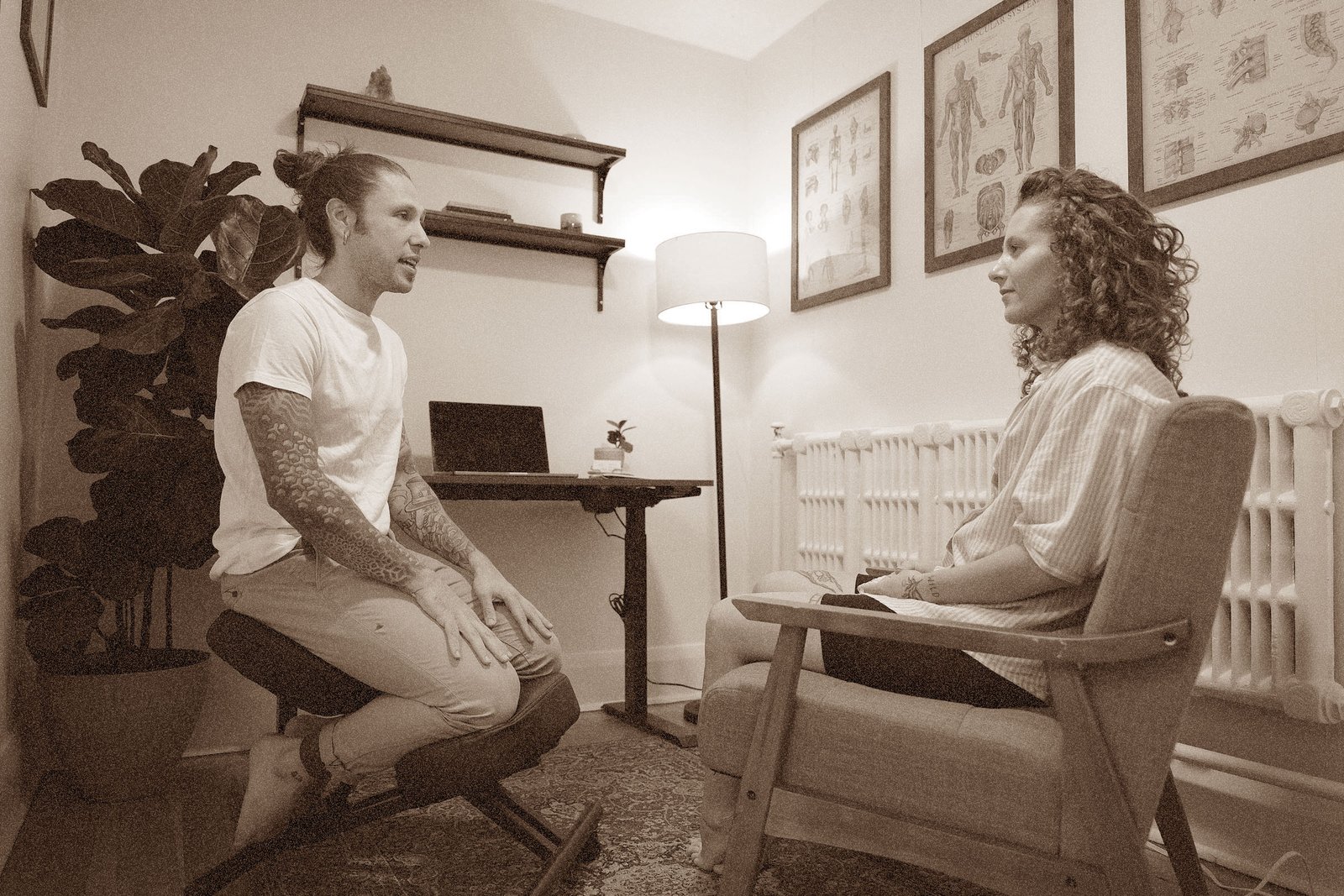
I’m Tomer, a Certified Rolfer at Unify Rolfing in Toronto. I work with athletes at every level, from recreational runners and weekend warriors to competitive cyclists, swimmers, and strength athletes. What they share is an intuition that something about the way their body is organized is holding them back. They’re usually right. Rolfing addresses that organization at the deepest level available.
—————————————————-
Why athletes need more than conventional recovery
Athletes generally have good recovery tools. Massage relieves muscular tension. Physiotherapy rehabilitates injuries. Chiropractic care works on joint mechanics. Stretching and mobility work maintain range of motion.
But none of these systematically address the body’s fascial architecture, the connective tissue framework that determines how your skeleton is positioned, how forces travel through your body, and how efficiently your muscles can work.
Think of it like a car. The engine might be powerful, but if the chassis is bent, the wheels are misaligned, and the suspension is uneven, that engine can’t deliver its full potential. Mechanical inefficiency bleeds power and accelerates wear.
Your body works the same way. Fascial restrictions from past injuries, years of repetitive training, and asymmetric movement patterns create structural misalignments. Muscles end up working harder than they need to. Range of motion shrinks. Vulnerability to injury grows. You can’t train your way past a structural limitation. You have to address the structure itself.
For a deeper look at the fascial system, I wrote about understanding fascia and connective tissue.
—————————————————-
How structural alignment affects athletic performance
The relationship between structure and performance is concrete and measurable.
Efficiency of force transmission
When your body is well aligned, force transmits efficiently through the fascial and skeletal systems from the ground up. A runner with good structural alignment transfers ground reaction forces cleanly through the foot, ankle, knee, hip, and spine, wasting minimal energy on compensatory muscle firing.
When alignment is off, every stride requires extra muscular work to stabilize and compensate. Over a 10K run (roughly 7,000 to 8,000 strides), even small inefficiencies compound into real energy waste, premature fatigue, and increased stress on vulnerable joints.
Range of motion under load
Flexibility matters, but what matters more for athletes is usable range of motion, how much range you can access while generating force. Fascial restrictions don’t just limit passive flexibility. They limit the range available during dynamic, loaded movement.
A weightlifter with restricted thoracic fascia can stretch their upper back on a foam roller, but under a heavy barbell overhead, that restriction reasserts itself. The fascial tissue hasn’t actually changed. It’s been temporarily mobilized. Rolfing creates lasting change in the tissue itself, so the range of motion gains persist under load and at speed.
Proprioception and coordination
Fascia is the body’s richest source of proprioceptive information. When fascial tissue is restricted and adhered, the quality of that input degrades. For athletes, this means reduced body awareness, slower reactions, less precise movement control.
Restoring fascial health improves the flow of proprioceptive information. Athletes experience it as better balance, more precise motor control, and a general sense of being more “in” their body. Many describe it as being “in the zone” more consistently.
Breathing efficiency
Breathing is the foundation of aerobic performance. The diaphragm, intercostal muscles, and ribcage are all embedded in fascial tissue. When this tissue is restricted (common in athletes who maintain rigid trunk posture during training), breathing becomes shallower and less efficient.
The first session of Rolfing’s Ten Series specifically addresses breathing structures. Athletes frequently report real improvements in breathing depth and ease, which directly translates to better endurance and faster recovery between efforts.
—————————————————-
Rolfing for injury prevention
Most non-contact athletic injuries aren’t bad luck. They’re the predictable result of structural imbalances, movement compensations, and accumulated fascial restrictions that eventually overwhelm the body’s capacity to adapt.
How injuries actually develop
Consider a common scenario. A runner with a slight pelvic tilt, maybe from an old ankle injury, develops fascial shortening on one side. This asymmetry causes uneven loading through the knees. For months or years, the body compensates well, until it can’t. A slightly longer run, a slight change in terrain, and suddenly there’s a knee injury that appears to come from nowhere.
It didn’t come from nowhere. It came from a structural pattern that was building toward failure. The specific event was just the last straw.
Rolfing addresses these underlying structural patterns before they lead to injury. Restoring balance, improving alignment, and resolving fascial restrictions reduces the compensatory loads that set the stage for overuse injuries.
Common injury patterns Rolfing can address
IT band syndrome is often related to fascial restrictions in the lateral line and hip rotators, not just a “tight IT band.” Plantar fasciitis frequently connects to fascial restrictions throughout the posterior chain, not just the foot. Knee pain is often a result of rotational or alignment issues in the hip and ankle that create uneven loading at the knee. Lower back pain commonly links to restricted hip flexors (psoas), hamstring fascia, and thoracolumbar fascia. Shoulder injuries frequently connect to restricted thoracic mobility and fascial adhesions in the ribcage and neck. Achilles tendinopathy often relates to fascial restrictions in the calf, posterior compartment, and foot.
For each of these, Rolfing doesn’t just treat the symptomatic area. It addresses the structural pattern that created the vulnerability. That’s why the results tend to last.
—————————————————-
Rolfing for recovery
Post-training recovery
After intense training, fascia becomes temporarily dehydrated and more rigid. This contributes to the stiffness and reduced range of motion you feel in the day or two after a hard session. While it resolves naturally, accumulated training load over weeks and months can lead to chronic fascial density that doesn’t fully resolve on its own.
Regular Rolfing sessions help maintain fascial hydration and elasticity, reducing the cumulative impact of training stress. Athletes who incorporate Rolfing into their training cycles often report less residual stiffness, better movement quality between sessions, and a sense that their body is recovering more completely.
Post-injury recovery
After an injury, the body lays down scar tissue and develops compensatory movement patterns to protect the injured area. These adaptations are essential for healing, but they frequently persist long after the injury itself has resolved.
Rolfing helps by working with scar tissue to improve its organization and reduce adhesions, addressing the compensatory patterns that developed during healing, restoring structural balance so the healed area isn’t chronically overloaded, and re-establishing proprioceptive accuracy in the affected area.
Many athletes come to Rolfing after physiotherapy has addressed the acute phase of an injury. They’re looking to resolve the lingering structural effects preventing them from returning to full performance. This is one of the most rewarding parts of my practice, helping someone’s body move past the ghost of an old injury.
—————————————————-
Specific sports and how Rolfing helps
Rolfing benefits athletes in any sport, but certain activities create characteristic fascial patterns that respond particularly well to structural work.
Running
Running is a sagittal plane dominant activity (forward and back) that creates predictable fascial patterns: shortened hip flexors, density in the IT band and lateral structures, restriction in the plantar fascia and Achilles complex, and reduced rotational mobility in the thorax.
Rolfing for runners focuses on restoring length and elasticity to these structures, improving pelvic balance, and freeing the ribcage for more efficient breathing. Runners frequently tell me they feel lighter on their feet and that their stride feels smoother. Some describe discovering what feels like a “new gear,” not from increased fitness but from reduced structural drag.
A real-world example: a runner with a restricted right hip flexor unconsciously shortens their stride on that side, creating an asymmetric gait. They may not feel pain, but they’re working harder than necessary and loading their left leg disproportionately. After Rolfing addresses the restriction, their stride evens out, their pace improves without increased effort, and the early signs of left knee strain that were building quietly resolve.
Cycling
Cycling holds the body in sustained flexion: hips bent, spine rounded, shoulders forward, neck extended. Over thousands of hours in the saddle, fascia adapts to this shape. It gets harder and harder to access full extension and rotation off the bike.
Rolfing for cyclists opens the front line of the body (hip flexors, abdominal fascia, chest), restores thoracic mobility, and frees the neck from that chronic extension pattern. Cyclists report a more comfortable riding position, better power transfer through the pedal stroke because the hip extends more completely, reduced neck and lower back pain, and improved breathing on climbs.
Swimming
Swimming demands extraordinary shoulder mobility, rotational capacity in the thorax, and a streamlined body position. Fascial restrictions in the shoulder girdle, latissimus dorsi, thoracolumbar junction, and hip flexors directly impair stroke mechanics.
Rolfing for swimmers focuses on freeing rotational capacity in the ribcage, restoring full shoulder range of motion, and improving the length and coordination of the body’s fascial lines in rotation. Swimmers often notice improved catch and pull mechanics, reduced shoulder strain, and a longer, more efficient stroke.
Weightlifting and strength training
Heavy loading creates dense, strong fascial tissue, which is exactly what you want. But it also creates fascial adhesions and restrictions, particularly in areas subjected to the greatest compressive and tensile forces. The overhead position in Olympic lifting, the deep squat, and the deadlift all require full body fascial freedom to execute safely.
Rolfing for strength athletes focuses on restoring the mobility needed for optimal lifting positions. That means thoracic extension for overhead work, hip and ankle mobility for squatting, and hamstring and posterior chain length for hip hinge patterns. The result is access to better positions, more efficient force production, and reduced injury risk.
A typical improvement: a lifter who can’t achieve full depth in the squat due to restricted ankle dorsiflexion and hip capsule mobility gains meaningful range after Rolfing addresses the fascial restrictions in the lower leg, anterior hip, and lumbar spine. The improved position allows better force production, which translates directly to heavier lifts.
Yoga
This one might seem counterintuitive. Yoga practitioners are flexible, so why would they need fascial work? Because flexibility without structural balance creates its own problems. Many experienced yogis are hypermobile in some areas and restricted in others, creating joint stress at the transition points.
Rolfing for yoga practitioners focuses on balancing the fascial system so that mobility is supported by stability. It addresses the fascial restrictions that create compensation patterns in otherwise flexible bodies and helps practitioners find the integration between strength and length that makes flexibility actually functional.
—————————————————-
How Rolfing differs from sports massage
This is one of the most common questions I get from athletes, and it’s worth addressing directly.
Sports massage works primarily with muscles. It uses techniques like effleurage, petrissage, friction, and trigger point work to reduce muscular tension, improve circulation, and promote recovery. It’s excellent at what it does, and I recommend it as part of any athlete’s recovery program.
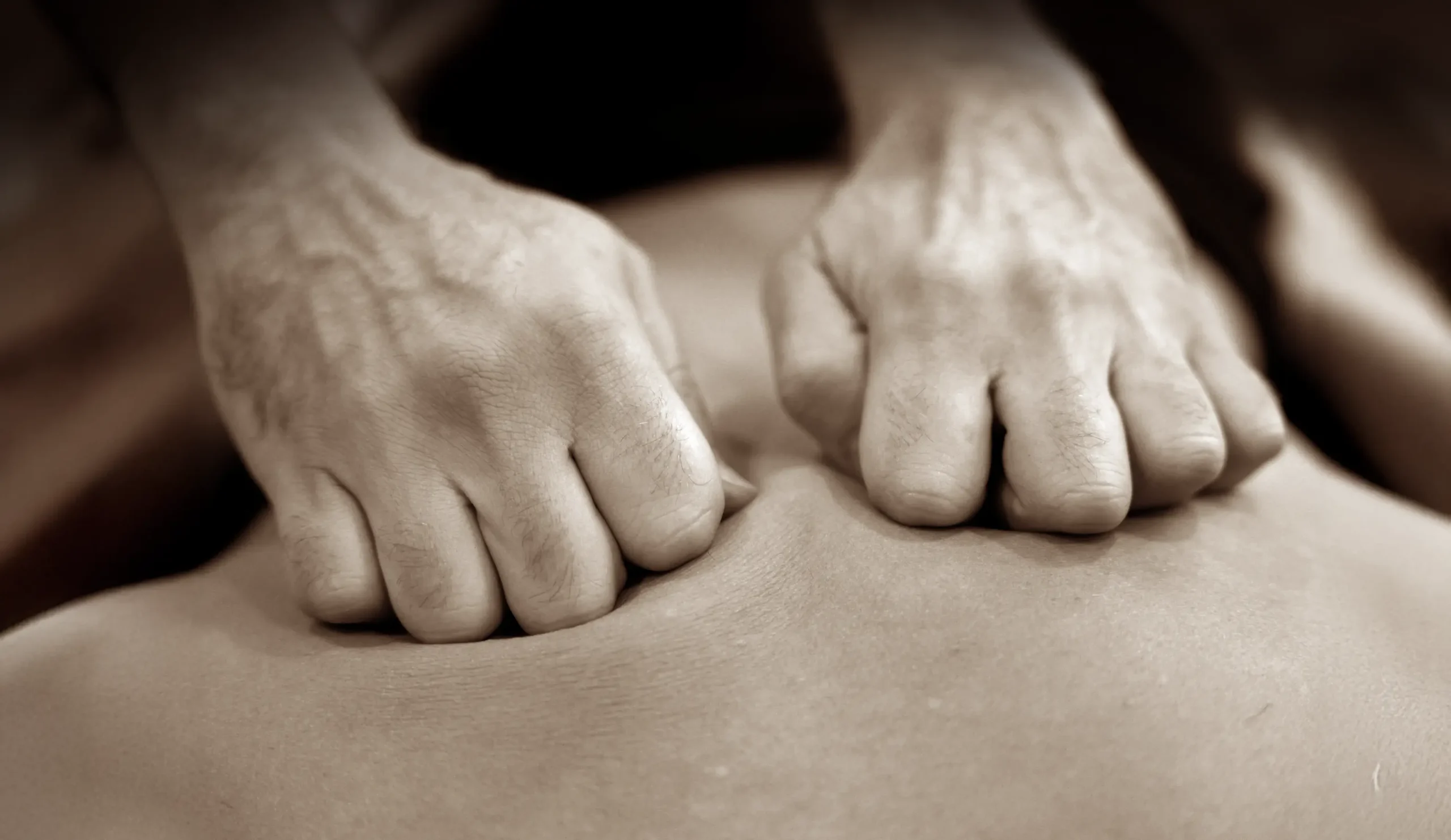
Rolfing works primarily with fascia and addresses structural patterns. The goals, techniques, and outcomes are different:
| Sports Massage | Rolfing | |
|---|---|---|
| Primary tissue | Muscle | Fascia |
| Primary goal | Relieve tension, promote recovery | Reorganize structure, improve alignment |
| Pace | Typically rhythmic and flowing | Slow, sustained, precise |
| Scope | Usually focused on specific muscle groups | Whole body, systematic |
| Duration of effects | Hours to days | Weeks to months to permanent |
| Approach to pain | Treats the painful area | Addresses the structural pattern causing pain |
These modalities complement each other well. Sports massage manages the muscular effects of training on an ongoing basis. Rolfing addresses the deeper structural patterns that massage can’t reach. Many of my athlete clients do both.
For more about how Rolfing compares to other approaches, visit the Why Rolfing page.
—————————————————-
What the research shows
The research on Rolfing and athletic performance is still growing, but there are some findings worth knowing about:
- A study in the Journal of Bodywork and Movement Therapies found that a series of Rolfing sessions produced significant improvements in standing balance and pelvic symmetry, both directly relevant to athletic performance.
- Research on fascial manipulation (a related approach) has shown measurable improvements in range of motion, pain reduction, and functional outcomes in athletes with overuse injuries.
- Dr. Robert Schleip and the Fascia Research Society have demonstrated that skilled manual work changes fascial tissue properties, including hydration, density, and elasticity, in ways that support better movement and recovery.
- Research on myofascial force transmission shows that up to 30% of the force a muscle generates travels through its fascial connections rather than its direct tendon attachments. Fascial health matters for force production.
The research also supports what I see in practice: structural integration produces changes that are qualitatively different from, and longer lasting than, those produced by approaches focused on muscles alone.
—————————————————-
Integrating Rolfing into your training program
If you’re considering Rolfing as part of your athletic program, here’s how I’d suggest approaching it.
Timing within a training cycle
The ideal time for intensive Rolfing work, like the Ten Series, is during a base building phase or off-season, when your body has the recovery capacity to integrate significant structural changes. Don’t start a Ten Series the week before a major race.
Individual Rolfing sessions can be incorporated at any point in a training cycle. I schedule sessions for athletes based on their training calendar, typically placing them on easier training days or rest days.
How many sessions
For athletes, I generally recommend one of three approaches. The full Ten Series is best for athletes who want comprehensive structural reorganization, ideally during an off-season or early in a training cycle, with sessions spaced one to two weeks apart. It addresses the entire body systematically and creates the most thorough, lasting change.
A targeted series of 3 to 5 sessions works well for athletes with specific structural issues: a restricted hip, chronic shoulder tightness, persistent asymmetry. This addresses the primary limitation without the time commitment of the full series.
Periodic maintenance sessions, every 3 to 6 weeks, work for athletes who have completed a series and want to maintain their structural gains through heavy training. These sessions address the fascial patterns that accumulate from training load before they become problematic.
Scheduling around training
Schedule Rolfing on rest days or easy training days. Allow 24 to 48 hours before your next intense session. Light movement like walking or easy swimming the day after is beneficial. Avoid heavy loading or high intensity work immediately after, your body is integrating structural changes and needs time to recalibrate.
What to expect
Athletes who go through a Rolfing series typically notice changes in a rough sequence. Reduced stiffness and improved recovery come first, often after the first session. Better movement quality and body awareness show up after 2 to 3 sessions. Measurable performance improvements tend to emerge after 4 to 6 sessions, as structural changes integrate with movement patterns. Reduced injury frequency follows over months, as the underlying structural vulnerabilities resolve.
The performance improvements often show up in ways people don’t expect. A cyclist notices they can sustain their position longer without back pain. A runner finds their pace has improved without training harder. A weightlifter achieves a position they’d been chasing for months. The changes come from reduced structural resistance, not greater fitness or effort.
—————————————————-
Common questions from athletes
Will Rolfing make me sore? You may experience mild soreness similar to a workout, typically lasting 24 to 48 hours. It’s rarely enough to interfere with training if you schedule it well.
Can I train the same day? Light movement is fine. I’d avoid intense training for 24 hours to allow integration.
How quickly will I see results? Most athletes notice qualitative changes (improved body awareness, reduced stiffness) after the first session. Performance-measurable changes typically emerge after 3 to 5 sessions.
Is this just for elite athletes? No. Recreational athletes, weekend warriors, and anyone who is physically active can benefit. Recreational athletes often have more structural imbalances to address because they typically don’t have access to the support teams that professional athletes rely on.
For more answers, visit the FAQ page.
—————————————————-
Structure is the foundation
You invest in shoes, gear, coaching, nutrition, recovery tools. Your body’s structural organization is the platform all of those investments operate on. When it’s well organized, everything works better. When it’s compromised by fascial restrictions and structural imbalances, everything works harder.
Rolfing is an investment in that foundation. It doesn’t replace training, physiotherapy, or sports massage. It’s the structural layer that makes all of those more effective.
If you’re an athlete in Toronto looking to break through a performance ceiling, resolve a nagging structural issue, or just move better, I’d welcome the conversation. You can reach me at 647-581-7018 or through the contact page. The studio is at 272 Roncesvalles Ave.