If you’ve heard the word “Rolfing” and wondered what it actually is, you’re in good company. Most people find their way to it through a friend, a physiotherapist’s suggestion, or a late-night search for something that might finally help their chronic pain. And the first question is almost always the same: Is this just a type of massage?
No. Rolfing Structural Integration is a form of hands-on bodywork that addresses your body’s connective tissue, called fascia, to improve alignment, ease chronic tension, and help you move more freely. It was developed over decades of research and takes a fundamentally different approach from massage therapy.
I’m a Certified Rolfer practicing in Toronto, and I work with people every day who are hearing about Rolfing for the first time. I wrote this guide to give you an honest, thorough picture of what Rolfing is, how it works, and whether it might make sense for your body.
Where Rolfing came from
Rolfing is named after Dr. Ida P. Rolf (1896-1979), a biochemist who earned her PhD from Columbia University in 1920, one of very few women in science at that time. She spent decades studying the body, pulling from osteopathy, yoga, and her own biochemistry training to develop a system of bodywork that could create lasting structural change.
Her core insight was that the body’s structure, how bones, muscles, and connective tissue are organized in relation to gravity, affects how we feel and function. When structure is out of balance, the body compensates. Those compensations lead to pain, restricted movement, and fatigue. Instead of chasing symptoms one at a time, Dr. Rolf built an approach that treats the whole body as a connected system.
She founded the Rolf Institute of Structural Integration in Boulder, Colorado, in 1971. It’s still the certifying body for Rolfers worldwide. Every Certified Rolfer completes extensive training in anatomy, physiology, kinesiology, and the specific hands-on techniques that define this work.
Fascia: the tissue that makes Rolfing work
You can’t really understand Rolfing without understanding fascia. Fascia is the web of connective tissue that wraps and runs through every muscle, bone, nerve, blood vessel, and organ in your body. It’s not a collection of separate pieces. It’s one continuous, three-dimensional network running from the top of your head to the bottoms of your feet.
Fascia holds your organs in place and gives your body its shape. It transmits mechanical forces between muscles and across joints when you move. It’s packed with sensory nerve endings that tell your brain where your body is in space. And it acts as a shock absorber.
Here’s the thing most people don’t realize: fascia changes. It responds to how you use your body, or don’t. Repetitive movements, years of sitting, injuries, surgeries, even emotional stress can cause fascia to thicken, shorten, and stick in patterns that restrict movement and pull the body out of alignment.
If you’ve ever noticed one shoulder sits higher than the other, or that you tend to lean to one side when you stand, those asymmetries usually reflect fascial patterns that have built up over years. They don’t resolve on their own because the fascial web has essentially learned to hold that shape.
Rolfing works directly with this tissue to change those patterns.
How Rolfing actually works
Rolfing uses skilled manual manipulation of the fascial network to release restrictions, restore mobility, and bring the body into better alignment with gravity. But it’s not just pressing on tight spots. There’s a systematic logic to it that addresses the body as a whole.
The relationship with gravity
One of the things that sets Rolfing apart is how seriously it takes gravity. Gravity is always acting on us. When the body is well organized, when the head, ribcage, pelvis, and legs stack efficiently, gravity actually supports you. Movement feels easier. Standing and sitting take less effort.
When the body is disorganized, when the head juts forward or the pelvis tilts or the ribcage compresses, gravity becomes a force pulling you down. Your muscles have to work overtime to compensate, and that leads to chronic tension, fatigue, and pain.
My job is to help reorganize the body so that gravity works with it instead of against it.
What the touch feels like
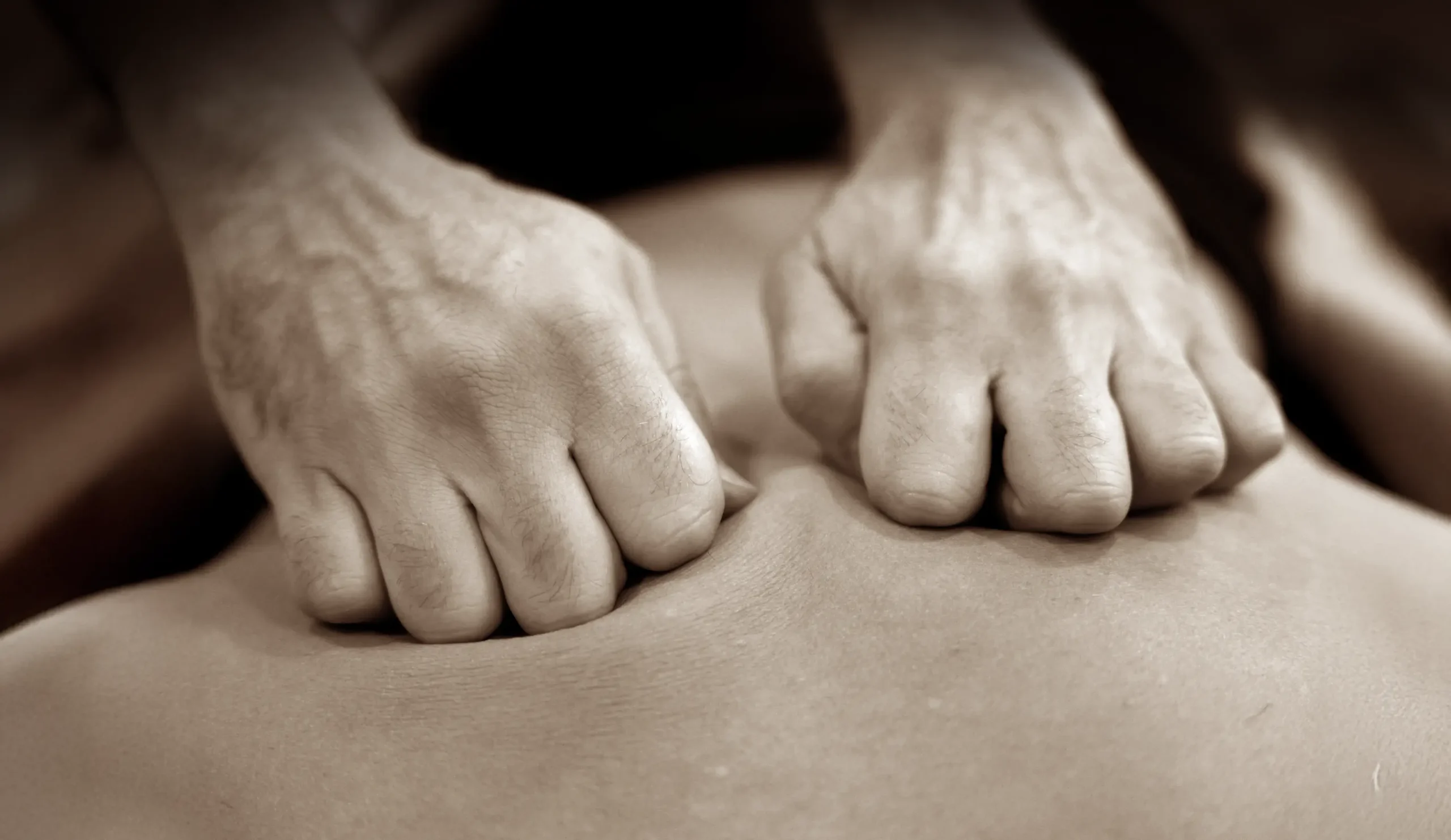
Rolfing involves a range of touch, from broad, slow pressure to precise work on specific fascial layers. I use fingers, knuckles, and forearms to engage with the tissue. The work is deliberate and patient. Fascia responds best to sustained, well-directed pressure rather than quick, forceful manipulation.
You’ll often be asked to breathe into the area being worked or to make small movements during a session. This active participation helps your nervous system integrate the changes happening in the tissue. Rolfing isn’t something done to you. It’s something we do together.
Movement education
Rolfing isn’t only table work. I incorporate movement education into sessions, which might mean observing how you walk, stand, or sit, and then offering cues or exercises that help your body adopt more efficient patterns. The goal is for changes to carry into your daily life, not just feel good on the table.
The ten series
While you can do individual Rolfing sessions tailored to specific concerns, the signature protocol is the Ten Series, a sequence of ten sessions that systematically addresses the entire body. Dr. Ida Rolf designed it as a “recipe” for structural integration, and each session builds on the one before it.
Sessions 1 through 3 are the “sleeve sessions.” They address the more superficial layers of fascia, the tissue closest to the skin. The focus is on opening the breath, freeing the ribcage, and creating ease in the outer layers. Most people notice changes in how they breathe and how their body feels in space after these first few sessions.
Sessions 4 through 7 go deeper. These are the “core sessions,” working with fascia around the spine, pelvis, and the deep muscles of the trunk. This is where real structural shifts tend to happen. Long-standing postural patterns often start to change during this phase.
Sessions 8 through 10 are about integration, bringing everything together. I work to weave the changes from earlier sessions into a coherent whole so the body moves and functions as a unified system.
The Ten Series is typically done over several months, with sessions spaced one to two weeks apart to give the body time to adapt. You can learn more about how sessions are structured on our sessions page.
What Rolfing can do for you
People come to Rolfing for all kinds of reasons, and the results often surprise them.
Posture and alignment are the most visible changes. As fascial restrictions release and the body finds better balance, posture improves naturally, not because you’re forcing yourself to stand straighter, but because the structure itself has changed. Clients tell me standing tall feels effortless in a way it didn’t before.
A lot of people find me because of persistent pain that hasn’t responded to other treatments. Rolfing addresses the underlying structural patterns contributing to pain rather than just treating where it hurts. For chronic back pain, neck tension, and shoulder problems, that approach can make a real difference.
Movement gets freer as fascial adhesions release and joints regain their natural range of motion. I work with athletes, dancers, musicians, and yoga practitioners who notice clear improvements in their performance and body awareness.
Breathing often changes more than people expect. Many of us breathe shallowly without knowing it, restricted by tension in the ribcage, diaphragm, and abdominal fascia. When that opens up, it affects energy, sleep, and how you handle stress.
And there’s a subtler shift that happens too. People develop a different relationship with their body. They become more aware of their posture and movement habits, which helps them maintain the benefits long after sessions end.
To explore the full range of benefits, visit our why Rolfing page.
Who comes to see me
In my Toronto practice, I work with a pretty wide range of people. Office workers dealing with the postural effects of sitting at a computer all day. Athletes looking to improve performance or prevent injury. People with chronic pain who haven’t found lasting relief elsewhere. Folks recovering from injuries or surgeries who want to get back to full function. Performing artists (dancers, musicians, actors) who depend on their bodies for their livelihood. And plenty of people who just feel physically stuck, whether from aging, stress, or accumulated tension.
Rolfing is appropriate for most adults. If you’re unsure whether it’s right for your situation, I’m happy to talk it through. Check our FAQ page or get in touch.
How Rolfing differs from massage
I get this question constantly, so let me be direct. Rolfing and massage both involve hands-on work, but they have different goals and methods.
Massage primarily aims to relax muscles, relieve tension, and help you feel good. Rolfing aims to reorganize the body’s structure for lasting change. Massage works mainly with muscles; Rolfing works with the fascial system. A massage session typically addresses specific areas of discomfort. Rolfing follows a systematic approach that addresses the whole body over time. And the relaxation from massage tends to be temporary, while the structural changes from Rolfing are cumulative.
Neither is better than the other. They do different things. But if you’re looking for lasting change in how your body is organized, Rolfing is a different kind of work entirely. For a deeper comparison, see our article on Rolfing vs massage.
What to expect in a session
If you’ve never seen a Rolfer before, here’s what it looks like at our Toronto studio.
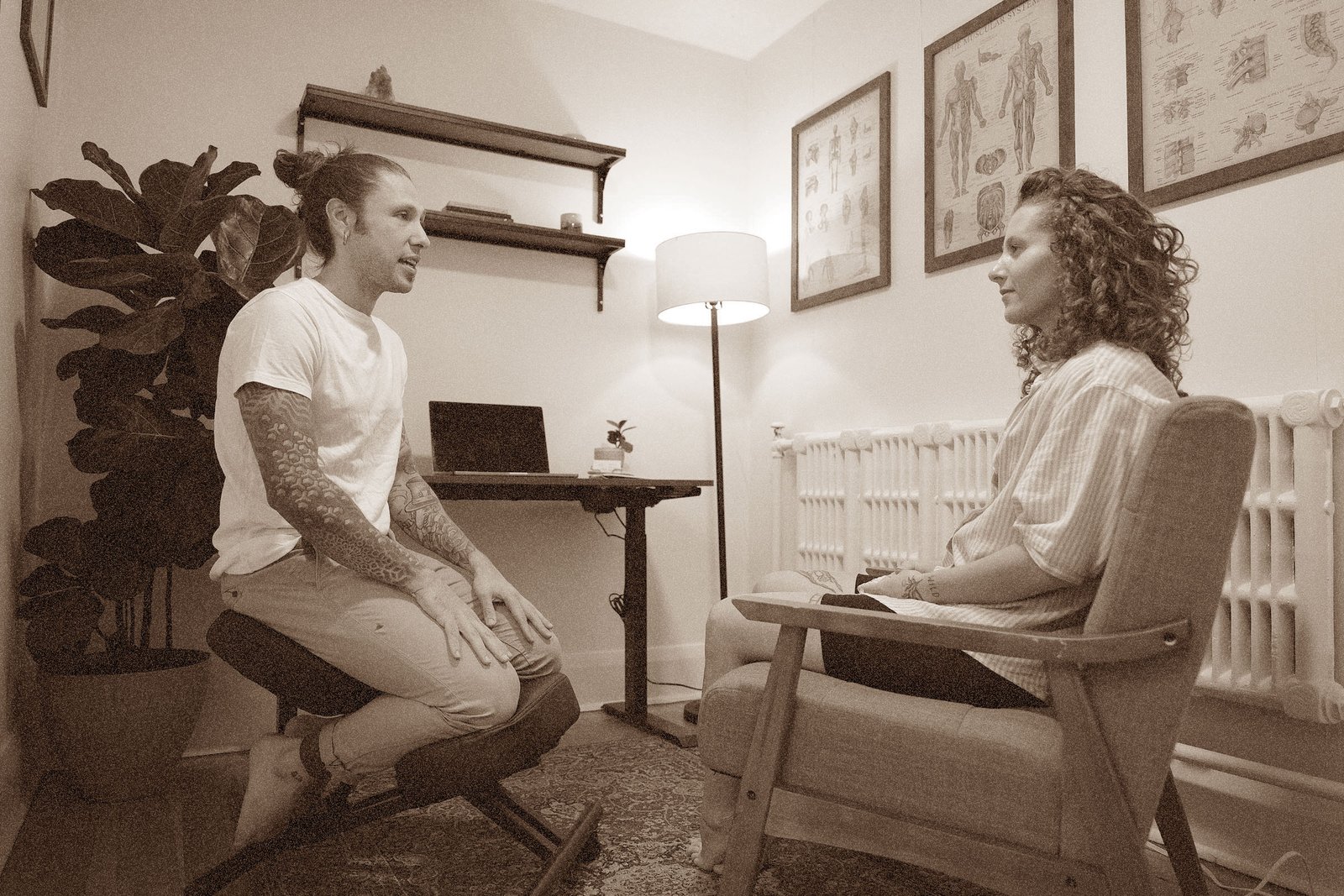
We start with a conversation about your health history, current concerns, and goals. I’ll look at your posture and movement patterns, how you stand, walk, and breathe, to get a clear picture of what your body is doing.
During the session, you’ll typically wear comfortable undergarments or athletic shorts. Unlike massage, Rolfing is often done without oil or lotion, which allows for more precise contact with the fascial tissue. The work happens while you’re lying on a treatment table, sitting, or standing. I use varying degrees of pressure, always within your comfort range, and I’ll ask for your feedback throughout. You may be asked to breathe into certain areas or make small movements to help the tissue release.
Sessions last about 75 to 90 minutes.
Afterward, many people feel taller, lighter, and more grounded. Some have a temporary sense of heightened body awareness or mild soreness, similar to after a good workout. Changes often continue to develop over the days following a session as the body integrates the work.
Finding a Rolfer in Toronto
If you’re looking for Rolfing in Toronto, make sure your practitioner has been trained and certified by the Rolf Institute of Structural Integration. The title “Certified Rolfer” means they completed the Institute’s full training program.
At Unify Rolfing, located at 272 Roncesvalles Ave in Toronto’s west end, I offer both the traditional Ten Series and individual sessions tailored to your needs. You can learn more about my background on the about page.
Is Rolfing right for you?
I’ll be straight with you: Rolfing isn’t for everyone, and I don’t try to convince people otherwise. It works best for those willing to engage in the process, to pay attention to their body, participate during sessions, and be patient with change that unfolds over time.
If you’re dealing with chronic pain, postural issues, restricted movement, or a general sense that your body isn’t working the way it should, Rolfing is a thoughtful, evidence-informed approach to lasting structural change.
The best way to find out if it’s right for you is to try it.
Book a session
If you’re curious about what Rolfing can do for your body, I’d like to hear from you. Sessions at Unify Rolfing are $180+HST, and our studio is at 272 Roncesvalles Ave in Toronto.
Book your first session or call us at 647-581-7018 to schedule a consultation. Whether you’re new to Rolfing or ready to start the Ten Series, I’m here to help.