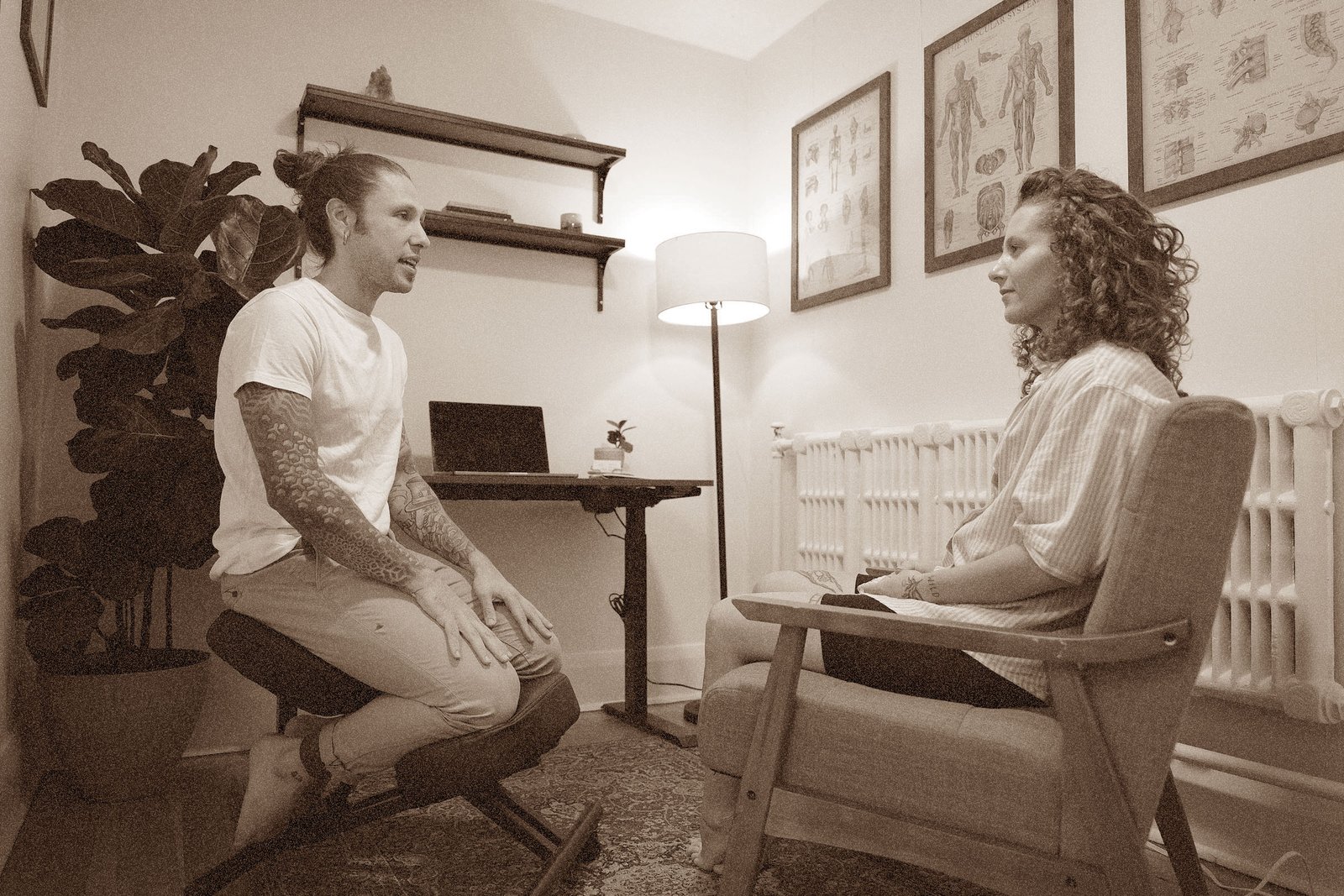
“So, is Rolfing basically a deep tissue massage?”
I get this question almost every week at my Toronto practice, and I get why people ask it. Both involve someone using their hands to work with your body. Both can reduce pain. From the outside, a session might even look similar.
But once you’re on the table, the similarity falls apart pretty fast. Rolfing Structural Integration and massage therapy come from different philosophies, use different techniques, and aim for different things. Knowing the difference can help you pick the right approach for what your body actually needs, or help you figure out when you might want both.
Relief vs. reorganization
The biggest difference between Rolfing and massage comes down to intent.
Massage therapy, in its many forms, is primarily about relieving symptoms. A registered massage therapist (RMT) works to relax tight muscles, reduce pain, improve circulation, and promote relaxation. The focus is usually on the muscular system, and the approach tends to be responsive: you come in with tight shoulders, and the therapist works on your shoulders. This is genuinely useful. The benefits for stress reduction, muscle recovery, and pain management are well documented.
Rolfing starts from a different place. Instead of asking “where does it hurt?”, I’m asking “why does it hurt?”, and I’m looking at how the whole body is organized to find the answer.
The idea is that pain, tension, and restricted movement are often symptoms of deeper structural imbalances. Your tight shoulders might be connected to a rotation in your ribcage. Your lower back pain might actually stem from restrictions in your hips or your feet. Rolfing tries to get at the root cause by working with the body’s fascial network, the web of connective tissue that shapes and supports everything. The goal isn’t temporary relief. It’s a lasting change in how your body is put together. I go into more detail about this on our why Rolfing page.
How the work actually feels
If you’ve experienced both massage and Rolfing, you noticed the difference immediately.
Massage therapy covers many modalities: Swedish, deep tissue, sports massage, Thai massage, trigger point therapy, and others. Generally it involves working with muscles and soft tissue, using oil or lotion for gliding strokes, and applying kneading, stroking, and compression techniques. The client usually lies passively on the table while the therapist addresses specific areas of tension or does a full body treatment.
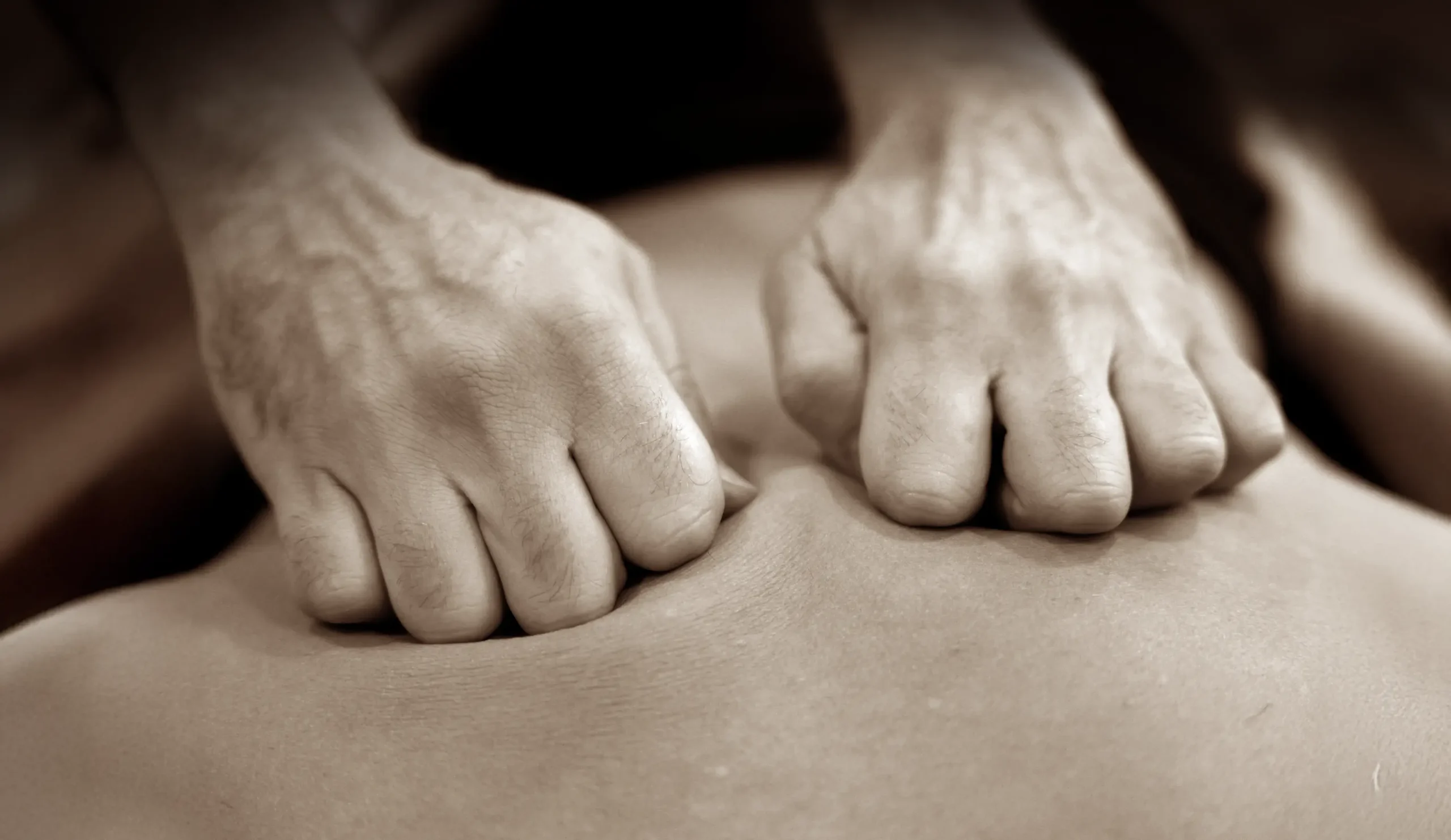
Rolfing feels different from the start. I’m working primarily with fascia (connective tissue), though muscles get affected too. I use little or no oil, which lets me engage specific fascial layers with more precision. The pressure is slow and sustained, using fingers, knuckles, and forearms to release fascial restrictions. And here’s a big one: you’re not just lying there. I’ll ask you to breathe into certain areas, make small movements, or even walk around mid-session.
The pacing is different too. Massage often has a rhythm to it, flowing strokes that move across the body. Rolfing is slower. I’m waiting for the fascial tissue to respond and release, and that takes patience. It’s normal for me to spend several minutes on a single spot, feeling for the tissue to soften and shift.
About the pain question
There’s a persistent myth that Rolfing is brutal. This is outdated. The work has changed a lot since its early days. It can be intense at times, but it should never go past your tolerance. I always work within each client’s comfort range and I want you to tell me if something is too much.
That said, Rolfing’s sensation is its own thing. Instead of the “hurts so good” feeling of deep tissue massage, Rolfing often produces a feeling of release, like tissue opening, lengthening, or letting go. Most clients describe it as satisfying in a way that’s hard to compare to anything else.
What each approach is best at
Massage is great for acute muscle tension and soreness (after a workout, a long flight, a stressful week), general relaxation and stress reduction, muscle recovery for athletes or anyone with a physical routine, tension headaches, circulation, and the emotional benefits of skilled touch. None of that should be underestimated.
Rolfing is where I’d point you for chronic postural issues like forward head posture, rounded shoulders, or pelvic tilt. It’s also the better choice when you have persistent pain that keeps returning after massage provides temporary relief, movement restrictions that limit your range of motion, repetitive strain conditions tied to habitual patterns, post-surgical recovery (especially scar tissue and compensatory patterns), performance goals for athletes or dancers or musicians, and that hard-to-describe feeling that something is structurally “off” but you can’t pinpoint what.
How sessions are structured
A typical massage appointment runs 30, 60, or 90 minutes. You describe your areas of concern, the therapist works on those areas or does a full body session, and you leave feeling better. You come back when you need it again. Each session is mostly self-contained. A good RMT tracks your progress, but there isn’t usually a sequential plan that builds from one visit to the next.
Rolfing sessions run 75 to 90 minutes and the structure is different. Rolfing is often organized as a series, most famously the Ten Series that Dr. Ida Rolf designed. It’s a sequence of ten sessions that systematically works through the entire body. Each session has a specific structural focus and builds on what came before. Think of it like a curriculum for your body, moving from superficial tissue to deep structures and then integrating everything together.
At my Toronto practice, I also see clients for individual sessions outside the full Ten Series. Maybe you’ve already completed the series and come back for periodic tune-ups, or you want to address something specific. But even in standalone sessions, the approach stays holistic and systematic.
How long results last
This is the difference that matters most to a lot of people.
The benefits of massage are real but they’re generally temporary. A good massage might leave you feeling relaxed and pain-free for a few days, maybe a week. Then the tension comes back, because the underlying structural patterns that caused it haven’t changed. That’s why a lot of people book massage on a regular schedule (weekly, biweekly, monthly) to keep symptoms managed. There’s nothing wrong with that. Regular maintenance massage is a legitimate form of self-care. But it does mean an ongoing commitment.
Rolfing changes the organization of your fascial system, so results tend to be cumulative and long lasting. After completing the Ten Series, many clients find that improvements in posture, pain, and movement quality hold for months or years.
I’m not saying one round of Rolfing fixes everything forever. Life happens. New injuries, new stresses, new habits. Some clients come back for periodic sessions or an advanced series. But the structural changes from Rolfing don’t just “wear off” the way relaxation from a massage does. Research backs this up. A study in the Journal of Bodywork and Movement Therapies found that structural improvements from Rolfing held at a five-month follow-up, which suggests the changes are durable.
Side-by-side comparison
| Massage therapy | Rolfing Structural Integration | |
|---|---|---|
| Primary focus | Muscles | Fascia (connective tissue) |
| Main goal | Symptom relief, relaxation | Structural reorganization |
| Approach | Treat areas of complaint | Address whole-body patterns |
| Session structure | Individual, self-contained | Often sequential (Ten Series) |
| Client participation | Mostly passive | Active (breathing, movement) |
| Use of lubricant | Yes (oil/lotion) | Minimal or none |
| Pressure style | Rhythmic, flowing | Slow, sustained, precise |
| Duration of results | Days to weeks | Months to years |
| Frequency | Regular ongoing sessions | Defined series, then periodic |
| Best for | Relaxation, acute tension | Chronic patterns, structural issues |
When massage is the right call
Go with massage when you’re dealing with acute soreness or tension and want relief now, when you’re stressed and need to decompress, when you want regular maintenance bodywork, or when you’re recovering from an intense workout. Toronto has a lot of excellent RMTs, and regular massage can be a real anchor in your wellness routine.
When Rolfing makes more sense
Consider Rolfing when you have chronic pain that keeps coming back despite massage or other treatments, when you want to address posture at a structural level, when you’re looking for change that lasts rather than relief that fades, when you notice asymmetries or imbalances in your body, when you want better body mechanics for athletic or artistic performance, or when you’ve tried a bunch of things and nothing has stuck. If any of that resonates, our FAQ page covers a lot of common questions about getting started.
Using Rolfing and massage together
I tell clients all the time that these aren’t competing approaches. They complement each other.
One common pattern: someone completes a Rolfing series to address underlying structural issues, then uses periodic massage to maintain tissue health, manage stress, and get the relaxation benefits that massage does so well. If you’re in the middle of a Rolfing series, it’s generally fine to keep getting massage too. Just let both practitioners know what you’re doing so the work doesn’t conflict. I usually suggest spacing massage and Rolfing sessions at least a few days apart so your body has time to integrate each one.
And sometimes it’s just about the situation. Stressful week and your shoulders are wrecked? A massage might be exactly right. Noticing that your posture has been getting worse and back pain is becoming a pattern? That’s a better time to look into Rolfing.
Making your decision
This doesn’t have to be either/or. But if you’re trying to figure out where to start, ask yourself: am I looking for relief, or am I looking for change?
If you want to feel better right now, less tense, more relaxed, less sore, massage is a solid choice. If you want your body to work differently, to stand taller, move more freely, and stop cycling through the same pain patterns, that’s what Rolfing is built for.
For a lot of people the answer is both, at different times for different reasons. What matters is choosing based on what your body actually needs.
Curious about what Rolfing can do for you?
If you’ve been relying on massage to manage pain or tension that keeps returning, Rolfing Structural Integration may offer the lasting change you’ve been looking for. At Unify Rolfing, located at 272 Roncesvalles Ave in Toronto, I work with each client to understand their unique structural patterns and develop a plan for meaningful, durable results.
Sessions are $180+HST. Book a session or call 647-581-7018 to learn more about how Rolfing can complement or transform your approach to bodywork.